

Apple’s first foldable iPhone is already selling out. But early excitement is easy to manufacture when supply is scarce. The real question is whether the Duo delivers enough everyday value to justify its extraordinary price — and whether Apple has finally learned the difference between an engineering breakthrough and a product people actually need.
Apple has a remarkable ability to make us want things we didn’t know we needed.
Sometimes this produces revolutionary products. The original iPhone, AirPods, and Apple Watch fundamentally changed their respective markets.
Other times, Apple produces something technically extraordinary that struggles to convince consumers to open their wallets.
Consider the $3,499 Apple Vision Pro, an astonishing feat of engineering that has struggled to achieve mainstream commercial success. Or the impossibly thin iPhone Air, which proved that Apple could build an exceptionally elegant smartphone, but apparently not that millions of people wanted to buy one.
Now comes the iPhone Duo.
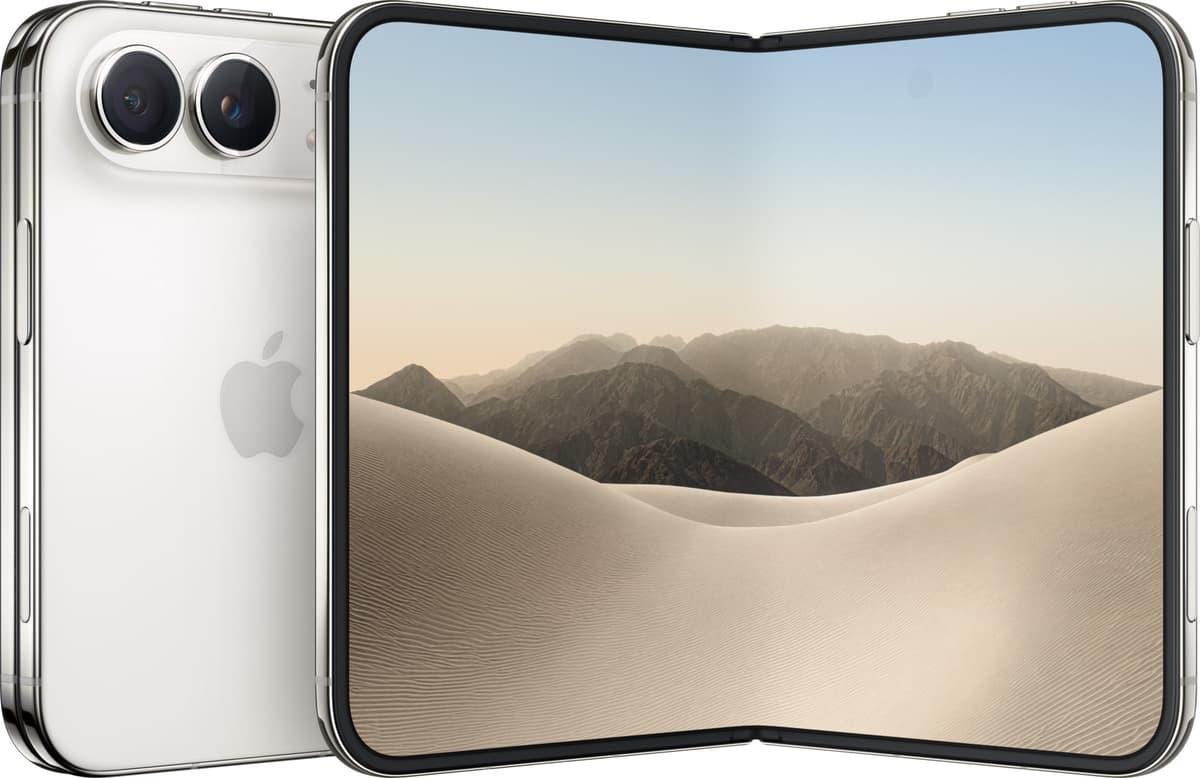
At $1,999 in the United States and $2,999 in Canada, Apple’s first foldable iPhone is its most expensive smartphone ever. Unfold it, and you get a 7.6-inch display. Close it, and it becomes a compact, passport-sized phone.
Apple is betting that consumers will pay roughly the price of two respectable smartphones for a device that folds in half.
Which raises an uncomfortable question:
Is Apple about to create its next major product success, or has it built another spectacular solution in search of a problem?
My prediction: The iPhone Duo will succeed commercially, but probably not in the way Apple enthusiasts expect.
It won’t replace traditional iPhones anytime soon. It won’t instantly make foldables mainstream. And some of its most impressive features may prove less useful than Apple’s marketing suggests.
But unlike Vision Pro and iPhone Air, Duo has something important going for it: a potentially compelling everyday reason to exist.
The distinction matters more than the hinge.
1. The Launch: Sold Out Before Anyone Could Really Test It
Let’s begin with the extraordinary events of October 16, 2026.
Apple opened preorders for the iPhone Duo at 5 a.m. Pacific. Within minutes, delivery estimates started slipping. First November. Then December. Eventually, January 2027.
According to The Verge’s launch-day reporting, some configurations were showing late-January delivery dates less than an hour after preorders opened.
Apple described the response as:
“Nothing short of extraordinary.”
As reported by 9to5Mac, the company said it was working to get devices into customers’ hands as quickly as possible.
That certainly sounds like a blockbuster.
But there’s a catch.
Selling out tells us that demand exceeded available supply. It doesn’t tell us how much demand exists.
Imagine opening a restaurant with 12 tables, selling every reservation in 30 seconds, and announcing that you’ve conquered the hospitality industry.
Congratulations. You have a popular restaurant with 12 tables.
The analogy is deliberately simplistic, but the underlying economics are real.
Apple hasn’t publicly disclosed how many Duo units were available for launch. And supply-chain constraints, particularly around expensive components, can make early shortages look more impressive than underlying demand warrants.
This distinction is particularly relevant because Counterpoint Research warned before launch that initial production would be limited.
Its September forecast suggested Apple could ship up to 6 million foldable iPhones during 2026, potentially capturing approximately 25% of the global foldable market.
That’s an impressive forecast for a device entering stores on October 23.
But it remains a forecast, not an actual sales result.
The first real test won’t be how quickly initial inventory disappears.
It will be whether demand remains strong once production catches up.
2. Three Expensive Apple Bets — Three Very Different Customer Problems
At first glance, Vision Pro, iPhone Air, and iPhone Duo share familiar characteristics: cutting-edge engineering, expensive components, luxurious industrial design, and glossy launch presentations that make your existing electronics suddenly feel ancient.
But from a product strategy perspective, the three are fundamentally different.
Product
Core promise
Customer’s main hurdle
Vision Pro
A new spatial computing experience
Adopting an entirely new device and behaviour
iPhone Air
A dramatically thinner, lighter iPhone
Accepting trade-offs for a design improvement
iPhone Duo
A smartphone that expands into a tablet-like workspace
Paying a premium for increased versatility
The critical difference is the nature of the value proposition.
Vision Pro asks people to adopt something new.
iPhone Air asks people to appreciate something better.
iPhone Duo asks people to do something more.
That third proposition is potentially much stronger.
Let’s examine why.
3. Vision Pro: When Engineering Brilliance Meets Consumer Indifference
When Apple introduced Vision Pro in 2023, Tim Cook declared:
“The era of spatial computing has arrived.”
The original Apple announcement positioned the headset as the beginning of an entirely new computing platform.
Technically, Vision Pro deserved much of the excitement.
Its displays, eye tracking, hand tracking, spatial interfaces, and integration with Apple’s ecosystem were genuinely impressive.
The problem wasn’t that Apple built a bad product.
The problem was that Apple hadn’t convincingly established why ordinary consumers needed it.
Consider the typical use cases.
Want to watch a movie? You already have a television.
Want to work with multiple windows? You have a laptop and monitor.
Want to call your family? You have FaceTime on your phone.
Vision Pro could make some of these experiences more immersive. But immersion alone wasn’t necessarily worth $3,499, particularly when it required wearing a substantial headset.
And watching a movie by yourself inside a futuristic ski mask isn’t necessarily an improvement over sitting next to someone on a couch.
The sales numbers expose the problem
According to a Financial Times investigation, Apple’s manufacturing partner Luxshare stopped production in early 2025 after approximately 390,000 units had been shipped during the 2024 launch period.
IDC subsequently estimated that only about 45,000 units would ship during the fourth quarter of 2025.
These are third-party shipment estimates, not Apple-disclosed retail sales figures. Nevertheless, they illustrate the enormous gap between Apple’s smartphone business and its spatial computing ambitions.
Importantly, Vision Pro hasn’t been abandoned. Apple introduced an M5-powered version in October 2025.
It may still prove strategically valuable in enterprise training, design, medical applications, and future wearable computing.
But as a mainstream consumer product, its performance has been disappointing.
The broader lesson is straightforward:
A revolutionary interface is not automatically a revolutionary customer need.
Apple invented an extraordinary new way to interact with digital information.
It didn’t establish a sufficiently large audience desperate to interact with information that way.
And that’s a crucial distinction.
4. iPhone Air: The Beautiful Product Nobody Was Asking For
The iPhone Air represents almost the opposite mistake.
Unlike Vision Pro, it didn’t require customers to learn a new computing paradigm.
It was simply a thinner iPhone.
At just 5.6 mm thick, the device was an impressive achievement in miniaturization.
During its September 2025 introduction, Apple’s hardware chief John Ternus said:
“You really have to hold it to believe it’s real.”
And he was probably right.
But there’s a difference between being impressed while holding a product and being motivated to purchase it.
For years, smartphone manufacturers have marketed increasingly thin phones. Yet consumers have consistently shown interest in battery life, cameras, performance, reliability, and price.
Once phones became comfortably pocketable, additional thinness faced diminishing returns.
The Air also required compromises.
Its single rear camera module offered less versatility than the Pro models’ multicamera systems. Its premium positioning put it in uncomfortable competition with better-equipped alternatives.
Consumers were effectively being asked to trade capabilities for millimetres.
Not exactly the easiest proposition to sell.
The evidence of weak demand
Consumer Intelligence Research Partners found that the iPhone Air accounted for approximately 6% of U.S. iPhone purchases in the December 2025 quarter.
According to further CIRP figures reported by PhoneArena, the Air accounted for just 5% of U.S. iPhone sales in the first quarter of 2026.
The iPhone 16 Plus, which occupied the comparable lineup position a year earlier, had captured 9%.
Those numbers are based on CIRP’s U.S. purchasing research rather than Apple’s official global model-level sales. But they strongly suggest that enthusiasm for thinness wasn’t translating into broad adoption.
The Information subsequently reported that Apple had delayed its next Air model and reduced production of the original.
Apple hasn’t published detailed Air sales numbers, and the product shouldn’t be considered a total failure merely because it underperformed expectations.
In fact, Air may have been useful as an engineering stepping stone toward foldable hardware.
Still, it exposes a recurring product management trap:
Confusing a remarkable product attribute with a compelling customer benefit.
A thinner phone looks wonderful in an advertisement.
But does it meaningfully improve your Tuesday afternoon?
For most people, apparently not enough.
5. Why iPhone Duo Has a Better Chance
The iPhone Duo’s advantage is that it isn’t primarily selling a physical characteristic.
It’s selling additional utility.
According to Apple’s official announcement, the Duo includes:
A 5.4-inch exterior display and 7.6-inch folding interior display.
The A20 Pro chip and dual-battery architecture.
Split View multitasking for two simultaneous applications.
A nano-textured inner display designed to reduce glare and crease visibility.
Support for Apple Pencil with USB-C planned later in 2026.
A titanium structure and IP68 water- and dust-resistance rating.
Apple claims up to 31 hours of video playback on the inner screen, 44 hours on the outer screen, or 24 hours of mixed usage. Those are manufacturer test figures, not independently verified battery-life results.
The specifications are impressive, but the real opportunity lies elsewhere.
One device, two usage contexts
Imagine you’re travelling for business.
On your regular iPhone, you’re switching between an email from a client and the presentation you’re reviewing.
On Duo, you open the phone and place them side by side.
Or imagine trying to understand an investment report while asking Siri questions about the underlying figures.
Or reviewing a contract, comparing two products, reading a research paper, planning a trip, or editing a document.
These aren’t entirely new activities.
That’s precisely the point.
Duo potentially makes existing, frequent activities easier without requiring consumers to fundamentally change their habits.
You still carry a phone.
You still unlock it.
You still use familiar applications.
But now, when the task demands more screen space, you unfold it.
Apple has also announced adaptations from Netflix, Zoom, and Slack, suggesting that major developers are already experimenting with the new form factor.
This matters because software differentiation can be more defensible than hardware differentiation.
A hinge can be copied.
An integrated experience involving operating-system behaviours, apps, continuity, cameras, accessories, and AI assistance is harder to replicate perfectly.
The strongest application might be surprisingly boring
Apple’s promotional materials emphasize immersive entertainment, gaming, AI, and impressive camera experiences.
But I suspect one of Duo’s most enduring benefits will be something less glamorous:
Reading.
Not the most exciting feature for a $2,000 device, admittedly.
Imagine the keynote: “Today, Apple is revolutionizing paragraphs.”
Yet reading long documents, articles, reports, and books is often uncomfortable on conventional smartphone screens.
A larger display can reduce scrolling and create a more natural layout.
That’s a genuine improvement to an existing behaviour.
The best product innovations don’t always create new activities. Sometimes they remove frustration from activities people already perform.
6. Apple Is Late to Foldables — And That Might Be Its Greatest Advantage
Samsung introduced its first Galaxy Fold in 2019.
By the time Apple unveiled Duo, competitors had spent years experimenting with hinges, aspect ratios, screens, thickness, software, and durability.
Samsung, Huawei, Google, Honor, and Motorola have already helped establish the category.
And that provides Apple with something valuable: evidence.
According to Counterpoint Research’s December 2025 analysis, foldable smartphone shipments grew 14% year over year in the third quarter of 2025, setting a quarterly record.
Foldables represented approximately 2.5% of global smartphone shipments that quarter.
In its September 2026 forecast, Counterpoint projected that cumulative worldwide foldable shipments would surpass 100 million devices by the end of the year.
This is not a nonexistent market waiting for someone to invent demand.
It’s an established premium segment that hasn’t yet achieved mass adoption.
And it is evolving.
Counterpoint’s September display-market research found that book-style folding panels were gaining ground while clamshell shipments declined.
The research described a shift toward larger, inward-folding devices.
That makes Apple’s timing particularly interesting.
Apple didn’t rush to market in 2019.
It waited until the most expensive engineering problems had been explored, consumers had demonstrated some willingness to purchase foldables, and the form factor had become more practical.
Of course, arriving late isn’t automatically a competitive advantage.
Samsung’s Galaxy Z Fold8 is a serious product, and competitors have years of real-world customer feedback that Apple lacks.
But Apple doesn’t need to invent the foldable category.
It needs to convince premium iPhone customers that Apple’s implementation is worth the upgrade.
That’s a substantially easier commercial problem than persuading the entire world to start wearing a computer on its face.
7. The $2,000 Problem: Duo’s Biggest Competitive Threat Is Another iPhone
Here’s where things become difficult.
The biggest obstacle to Duo’s success may not be Samsung.
It may be Apple’s own iPhone 18 Pro Max.
Consider the buying decision.
A premium customer can purchase a conventional Pro Max with excellent cameras, strong battery life, a large display, and a familiar design.
Or spend substantially more on Duo, gaining a folding screen but accepting additional mechanical complexity, more weight, and certain camera compromises.
The Duo uses a two-camera rear system with a 48MP main and 48MP ultra-wide. Its 2x telephoto capability comes from the main sensor rather than a dedicated telephoto module.
That is an important distinction for customers who prioritize camera versatility.
Duo also uses Touch ID instead of Face ID.
These trade-offs are not automatically deal-breakers, but they undermine the assumption that the most expensive iPhone must be the best iPhone at everything.
The true cost of ownership
Then there’s durability.
Apple emphasizes its titanium structure, sophisticated hinge, protective materials, and improved folding display.
But engineering claims are not substitutes for years of ownership data.
More concerning are the repair prices.
According to Apple’s repair estimates reported by MacRumors, U.S. customers without AppleCare+ could face:
Repair
Estimated U.S. cost
Inner folding display
$999
Outer display
$379
Battery service
$229
Other major damage
$1,499
Yes, replacing the inner display could cost almost $1,000.
For that price, the repair technician should probably include dinner and a handwritten apology.
AppleCare+ substantially reduces certain accidental-damage repair fees, but coverage adds to the ongoing cost of ownership.
This creates a problem product marketers sometimes underestimate: perceived financial risk.
Consumers don’t evaluate expensive purchases purely in terms of advertised benefits.
They also consider what happens when something goes wrong.
For a conventional smartphone, scratches and drops are familiar problems.
For a foldable, hinge reliability, display wear, accidental damage, and repair cost introduce additional uncertainties.
Until Duo accumulates a credible long-term durability record, these concerns could limit adoption beyond wealthy enthusiasts and early adopters.
8. The Market Reality: Foldables Are Growing, but Smartphones Are Struggling
Another reason to temper expectations is the broader smartphone market.
According to Reuters’ October 12, 2026 report, global smartphone shipments fell approximately 20% year over year during the third quarter of 2026.
Counterpoint attributed the downturn in part to memory shortages and rising component costs, while consumers have been holding on to devices longer.
That creates an unusual environment.
On one hand, the industry desperately needs genuinely differentiated reasons for consumers to upgrade.
On the other hand, asking people to spend $2,000 on a smartphone during a contracting market isn’t exactly a low-risk strategy.
Duo’s opportunity is therefore not primarily mass-market volume.
It’s premiumization.
Apple already understands how to persuade customers to move from standard iPhones to Pro models. Duo represents another level above that.
And unlike Vision Pro, Duo competes for money consumers were already planning to spend on a smartphone.
Cannibalization isn’t necessarily failure
Suppose someone planned to buy an iPhone Pro Max but chooses Duo instead.
Apple hasn’t gained an additional smartphone customer.
But it may have increased the revenue generated from that customer.
Whether the transaction produces greater profit depends on manufacturing costs, component yields, warranty expenses, and the eventual selling price.
Higher revenue doesn’t automatically mean higher margins.
Nevertheless, Apple has a powerful reason to pursue this strategy.
Its July 2026 earnings announcement reported $109.4 billion in quarterly revenue, up 16% year over year.
A company operating at that scale doesn’t necessarily need every new product to sell 100 million units.
A smaller category with meaningful revenue, attractive margins, stronger customer retention, and room to expand could still be commercially important.
There is also a defensive benefit.
Every customer purchasing a Samsung foldable because Apple doesn’t offer one is a potential ecosystem departure.
Duo closes that gap.
And customers already using iMessage, Apple Watch, AirPods, iCloud, and other Apple services may prefer to pay a premium rather than change platforms.
That is not merely brand loyalty.
It’s the economics of switching costs.
9. The Hidden Danger: What If People Stop Unfolding It?
Now for the question I find most interesting.
What happens six months after purchase?
Imagine a customer buying Duo, enthusiastically showing it to friends, unfolding it 40 times during the first weekend, and then gradually returning to ordinary one-screen usage.
At that point, the innovative folding mechanism becomes an expensive party trick.
And the customer is left carrying a heavier, costlier iPhone with a hinge they barely use.
This is the single biggest product-market-fit risk for Duo.
It’s the difference between novelty and habit.
The first produces impressive launch-week statistics.
The second creates durable customer value.
The metrics Apple should really care about
If I were leading the Duo product strategy, I would be much less interested in opening-week sellouts than in five behavioural indicators.
First: Weekly meaningful unfold rate. Not simply how often people open the device, but how often opening it enables a useful activity that would have been harder on a conventional phone.
Second: Task-completion improvement. Do users complete document reviews, comparisons, shopping decisions, or communication workflows faster or with fewer errors?
Third: Multi-app retention. Apple has introduced Split View on iPhone for the first time. But what percentage of customers continue using it after 30, 90, and 180 days?
Fourth: Ownership satisfaction and durability. What happens to satisfaction after the novelty wears off? How frequently do customers encounter display problems, repair costs, and warranty claims?
Fifth: Next-device repurchase intent. After living with Duo, would owners willingly pay for another foldable, or return to a conventional Pro model?
That last metric may matter most.
A successful new product category doesn’t merely attract curious first-time buyers.
It creates customers who don’t want to go back.
Apple Watch accomplished that for many users. AirPods did the same.
Vision Pro hasn’t demonstrated that kind of widespread adoption. The Air appears to have struggled to establish a compelling enough reason to choose it over other iPhones.
Duo still has to prove its case.
And no preorder statistic can answer that question.
10. The AI Opportunity: A Folding Screen Is More Valuable When Intelligence Can Use It
There’s another strategic factor that could determine Duo’s future.
Artificial intelligence.
Apple’s reimagined Siri AI and on-device intelligence capabilities could become more useful when paired with a larger display.
Imagine a shopping assistant that explains two product specifications while both product pages remain visible.
Or a travel assistant comparing flight options with a live itinerary displayed alongside the conversation.
Or an AI tool helping revise a document while the original stays open.
These are examples of potentially valuable interactions, not evidence that every workflow already works perfectly.
But the direction is promising.
A conventional smartphone forces people to switch repeatedly between tasks and supporting information.
A folding screen offers more room for information and interaction to coexist.
This could reduce one of the persistent limitations of mobile AI interfaces: limited visible context.
However, the hardware alone doesn’t create the advantage.
The software must understand how to use that space.
If Siri simply displays longer answers on a bigger screen, Duo’s AI advantage will be fairly modest.
If Apple’s operating system and third-party applications develop genuinely useful side-by-side workflows, the larger display becomes much more valuable.
The potential breakthrough isn’t the folding screen. It’s what the software can accomplish once the screen unfolds.
That’s where Apple should concentrate its product investment.
11. What Success Would Actually Look Like
The temptation is to judge Duo against the original iPhone.
That’s the wrong comparison.
The original iPhone transformed the entire smartphone category. Duo enters an already mature market with an established customer base and formidable competitors.
A more realistic framework includes three possible outcomes.
Scenario A: Premium-category success — my base case
Duo becomes a desirable high-end alternative to the Pro Max.
It attracts enthusiasts, executives, professionals, affluent consumers, and people who genuinely value larger-screen productivity.
Sales grow as production expands and subsequent generations improve durability, weight, cameras, and price.
It remains a minority of Apple’s total iPhone shipments but becomes a commercially meaningful premium line.
This is the outcome I consider most likely.
Scenario B: A new mainstream premium standard
Duo’s expanded display becomes so useful that customers begin treating folding screens as an expected upgrade.
Developers create compelling new workflows. Production improves. Prices gradually fall.
Traditional flagship phones increasingly compete with foldables for premium customers.
Apple helps transform foldables from a luxury niche into a standard part of the smartphone market.
This is possible, but the current category economics suggest it would take years rather than months.
Counterpoint, for example, forecasts substantial foldable-market expansion in 2027, but that forecast still describes a relatively small portion of total smartphone shipments.
Scenario C: Another iPhone Air-style disappointment
Initial enthusiasts buy Duo enthusiastically.
Then reality intervenes.
Most customers find the conventional Pro Max sufficiently capable. The larger display turns out to be nice rather than necessary. Durability concerns persist, and prices remain stubbornly high.
Developers support the form factor but fail to create indispensable experiences.
The first launch becomes a memorable event without establishing a large, sustainable product category for Apple.
The difference between Scenario A and Scenario C may ultimately come down to a surprisingly simple question:
Does the product save users enough time, effort, or frustration to justify its premium every single week?
12. The Product Strategy Lesson: Don’t Sell the Feature. Sell the Freedom.
The most important lesson from these three products isn’t about foldable displays, spatial computing, or industrial design.
It’s about how innovation creates value.
Vision Pro sold the promise of an entirely new digital world.
iPhone Air sold an extraordinary physical design.
iPhone Duo has the opportunity to sell something more tangible: the freedom to expand your smartphone when you need more room.
That’s a much easier proposition for consumers to understand.
But Apple’s marketing still risks emphasizing the spectacular instead of the useful.
A crease-free display is impressive.
A titanium hinge with more than 100 engineered components is impressive.
A processor fabricated using advanced semiconductor technology is impressive.
None of those achievements, by themselves, make someone more productive, entertained, informed, or connected.
They are enablers of value, not the value itself.
A customer reviewing a contract on a plane doesn’t care how many tiny components are inside the hinge.
They care whether they can comfortably review the contract without unpacking a laptop.
That is the real product.
And if Apple succeeds, customers may stop talking about Duo’s engineering altogether.
They’ll simply say they prefer using it.
Final Verdict: iPhone Duo Will Probably Succeed — but It Won’t Be the Next iPhone Revolution
So, will iPhone Duo succeed or fail?
My bet is on success.
Not because of the extraordinary preorder demand.
Not because Apple has finally joined the foldable party after everyone else finished the appetizers.
And not because its engineering is unquestionably superior to Samsung’s.
Duo’s strongest advantage is that it expands something consumers already value, rather than asking them to value something entirely new.
That’s the crucial distinction between Duo, Vision Pro, and iPhone Air.
Vision Pro requires a new relationship with computing.
iPhone Air requires consumers to prioritize elegance over certain familiar capabilities.
Duo offers the possibility of a more versatile version of a device people already use for hours every day.
Of course, the $1,999 price, durability questions, repair costs, and camera trade-offs impose a substantial ceiling on its near-term audience.
And Apple’s biggest challenge will be turning first-week curiosity into sustained usage.
The real verdict won’t arrive on October 23.
It will emerge over the following 12 to 24 months, once we can see how owners actually use the device, whether they remain satisfied, and whether they want another one.
Until then, the spectacular preorder queues are encouraging — but they are not conclusive.
Ultimately, Apple doesn’t need Duo to replace every traditional smartphone.
It needs to create a meaningful premium segment whose customers feel that folding their phone makes their lives noticeably better.
If that happens, the first generation will have done its job.
If it doesn’t, Apple will have created another beautifully engineered technological curiosity.
And at $2,000, curiosity is a rather expensive subscription.
The bottom line: Vision Pro tried to reinvent computing. iPhone Air tried to perfect the smartphone’s physical design. iPhone Duo might succeed because it does something less ambitious and more valuable: making the smartphone you already love substantially more useful.
Sometimes the most important innovation isn’t creating an entirely new world. It’s giving people more room to work in the one they already inhabit.