

How to win the world’s most online, values‑driven, cancel‑happy (and wonderful) users
If you’ve ever watched a Zoomer juggle TikTok, Discord, and 47 photo edits while sending a Venmo request and shutting down a scam text faster than you can say “unsubscribe,” you’ve seen the future of your product. Gen Z isn’t just “the next generation of users”-they’re the cultural R&D lab for everyone else. As Satya Nadella famously put it, “the true scarce commodity is increasingly human attention.” (The Atlantic)
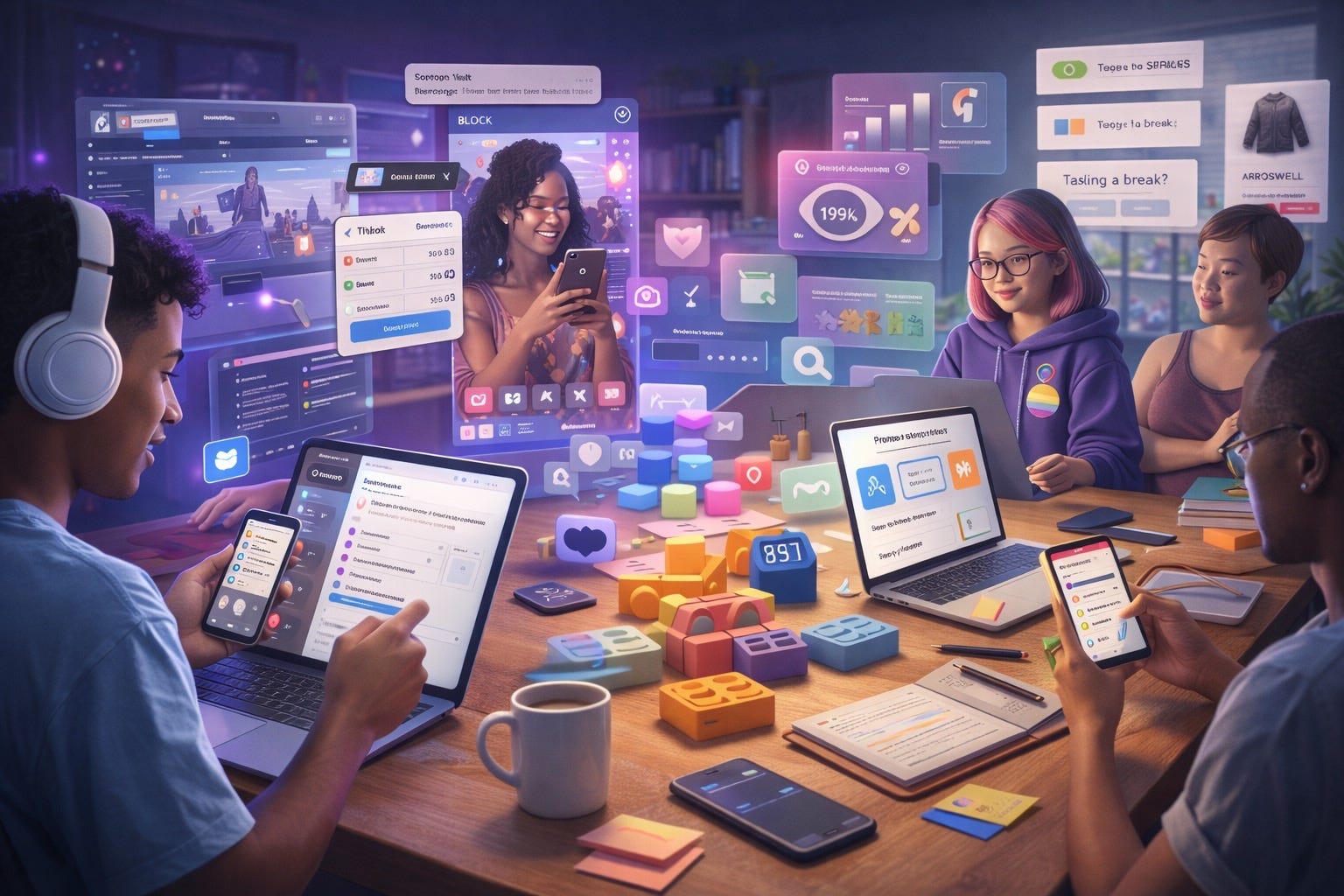
So how do you build for a generation that grew up in a world where the feed never ends, the store is in the app, and the line between creator and consumer is a smudge? Let’s turn research into a practical playbook-with a dash of humor, a few cautionary tales, and concrete product moves.
Meet Gen Z (and their context)
Definitions vary, but think late‑1990s to around 2010 for birth years. McKinsey calls them “digital natives” whose identity was shaped by the internet, climate anxiety, and COVID‑19-context that shows up in how they spend, learn, and demand meaning from products and brands. (McKinsey & Company)
Where they are (a lot): YouTube and TikTok. Pew’s latest teen fact sheet shows 90% of U.S. teens use YouTube; majorities also use TikTok (≈63%), Instagram (≈61%), and Snapchat (≈55%). (Pew Research Center) Among 18–29‑year‑olds (the older half of Gen Z), Instagram (78%), Snapchat (65%) and TikTok (62%) are standouts. Translation: video‑first, mobile‑first, creator‑led. (Pew Research Center)
How they discover and decide: Social is search. Sprout Social finds Gen Z treats social as their go‑to channel for information, discovery, and even customer care-often preferring it over traditional search engines-and nearly half plan to buy more through social commerce in 2025. (Sprout Social)
Where they hang out beyond feeds: Gaming platforms are social networks. Roblox reported 111.8 million DAUs in Q2 2025, with 64% of users now 13+ and heavy creator payouts-evidence that co‑creation isn’t a “feature,” it’s the platform.
What they value: Deloitte’s 2025 global Gen Z survey shows persistent cost‑of‑living stress and strong values: two‑thirds feel anxious about the environment and 65% say they’re willing to pay more for sustainable products-a huge signal for product positioning and roadmaps. (Deloitte) Identity matters, too: more than 1 in 5 Gen Z adults in the U.S. identify as LGBTQ+, which should inform inclusive defaults (names, pronouns, imagery) and safety features. (Gallup.com)
How they pay: Buy Now, Pay Later (BNPL) is mainstream for them. Reuters notes younger consumers over‑index on BNPL; LendingTree finds 33% of Gen Z BNPL users even used it for groceries in 2025-so plan conversion flows accordingly and build responsible guardrails. (Reuters, LendingTree)
Their media tolerance (or lack thereof): Churn is a lifestyle. Deloitte’s 2025 Digital Media Trends shows 54% of Gen Z canceled an SVOD service in the last six months; they lean ad‑supported, flexible, and low‑friction. If your onboarding or pricing feels like calculus, expect a rage‑quit. (Deloitte)
A mental‑health reality check: The U.S. Surgeon General warns that while social can have benefits, we cannot conclude it’s sufficiently safe for youth; nearly all teens use social media, and a sizeable share report heavy use. Product teams should internalize “safety by design,” not treat it as optics. (HHS.gov)
Practical playbook: product moves that resonate (and retain)
1) Make speed and clarity your superpowers
Attention isn’t “short”-it’s selective. Users will give you hours if you deliver value; they’ll give you seconds if you don’t. The usability rule of thumb still holds: after about 10 seconds of waiting, minds wander and tasks derail. Every tap, scroll, and paywall should feel instantaneous. (Nielsen Norman Group)
What to ship
Performance budgets for core flows (home feed, search, checkout).
Microcopy that explains, not performs. As Steve Krug put it, “Don’t make me think.” (It’s a cliché because it’s true.) (Goodreads)
Smart defaults: auto‑save, resume states, undo. Reduce the “what now?” moments.
PM humor break: If your loading screen needs witty quips, your loading is too long. Save the jokes for the release notes.
2) Design for creation and community, not just consumption
Gen Z expects to remix, review, and react. Co‑creation grows usage and trust. Look at Roblox’s ecosystem: a thriving creator economy plus algorithmic discovery lifted new titles into the top‑spend experiences within weeks. That’s not luck-it’s platform design.
What to ship
Low‑friction UGC tools: duet/reply formats, templates, easy rights requests.
Native collab: group lists, blends, or shared boards (Spotify’s “Blend”‑style ideas win with young users). (Music Ally, Spotify)
Creator rails: revenue splits, analytics, and in‑product promo surfaces so your best users become your best growth channel.
3) Be where discovery happens (social) and sell where the intent peaks (in‑app)
Gen Z discovers on social, checks the vibes in comments/UGC, and increasingly buys right there. Sprout Social reports 48% plan to make more purchases via social in 2025-especially on TikTok Shop. Build your catalog and support into social surfaces, but let users finish in your app without friction. (Sprout Social)
What to ship
Social‑first product pages (short video, creator quotes, community Q&A).
In‑app checkout that mirrors social carts (saved address, wallet, BNPL).
Reply‑in‑comments customer care for visible trust (Gen Z often DMs brands first). (Sprout Social)
4) Personalize responsibly (and transparently)
Gen Z loves great recommendations and hates creepy ones. They’ll trade data for value, but only with control. Give them the knobs and make the trade‑offs legible.
What to ship
Preference centers that are actually useful (topics, creators, ad frequency, notifications).
Explainable recs (“Because you liked X…” with an option to tune or mute).
Privacy presets freshmen can understand (location sharing off by default, easy “ghost” mode). The Surgeon General’s advisory underscores why this matters. (HHS.gov)
5) Offer flexible, ethical payments
BNPL boosts conversion; it also invites risk. Reuters’ BNPL charts show rapid growth and younger skew. LendingTree’s 2025 insight that a third of Gen Z BNPL users financed groceries should trigger design empathy-and proactive safeguards. (Reuters, LendingTree)
What to ship
BNPL with friction where it counts: eligibility checks, reminders, snooze once, transparent schedules.
Budget modes: set spend caps, surface “total cost” before commit.
Student pricing and ad‑supported tiers to address subscription fatigue (Deloitte pegs Gen Z churn at 54% in 6 months). (Deloitte)
6) Build sustainability and inclusivity into the product, not just the brand book
Values are not a slide-they’re a backlog. Two‑thirds of Gen Z say they’ll pay more for sustainable choices, and over 20% identify as LGBTQ+. That means real features and defaults, not just seasonal campaigns. (Deloitte, Gallup.com)
What to ship
Impact toggles: show carbon‑aware shipping or resale options by default; surfaces for “buy used” where relevant (the resale economy is booming). (thredUP newsroom)
Identity controls: chosen names, pronouns, inclusive avatars, and safe‑reporting built into flows (not hidden in help centers).
Accessible by design: alt text prompts, captions on by default, high‑contrast modes. (If your brand green fails WCAG, is it still green?)
7) Treat customer support like a product feature
Gen Z wants instant, conversational help-ideally without waiting for a human unless they need one. CX leaders are responding: 70% plan to integrate generative AI into many touchpoints in the next two years. Design self‑service that feels like a smart sidekick, and escalate gracefully. (Zendesk)
What to ship
AI triage with receipts: cite the policy, link the log, summarize the path taken.
Channel choice: chat, text, social DMs; email last. (Gen Z is least likely to prefer email.) (Smart Communications)
Trust signals: verified agent badges, resolution timers, and one‑tap handoffs.
8) Mind well‑being; reduce harm by default
“Healthy engagement” beats “any engagement.” The U.S. Surgeon General urges action; product teams should ship safety as an MVP, not a patch. (HHS.gov)
What to ship
Quiet hours and Do‑Not‑Disturb schedules that auto‑suggest based on behavior.
Sensitive‑content thresholds the user can tune; panic untag/private buttons.
“Why am I seeing this?” on algorithmic surfaces to reduce confusion and doomscroll triggers.
Case studies & signals
Duolingo’s “be native to the platform” lesson. Its TikTok‑first approach grew followers dramatically and turned a mascot into a meme (and a growth engine), with CTRs well above benchmarks in TikTok case studies and a 2025 push into YouTube Shorts paying off. The lesson isn’t “be unhinged”-it’s “be fluent in the culture you’re entering.” (TikTok For Business, Adweek)
Roblox as a co‑creation blueprint. AI‑driven discovery, constant live‑ops, and creator economics-plus a user base that’s now majority 13+-show how platform mechanics can foster rapid iteration and community flywheels.
Resale as a core journey, not a partner tab. ThredUp’s 2025 report highlights younger shoppers driving secondhand and doing it via social. If you sell goods, consider “resale mode” and trade‑in flows early. (thredUP newsroom)
Metrics that matter (and how to move them)
Time‑to‑value (TTV) and first action completion in under a few taps. If TTV climbs, your welcome mat is a welcome maze.
Community health: creator activation rate, UGC contribution rate, “reply in < X hours” in public threads.
Consentful personalization: % of users who set preferences (and keep them), opt‑out re‑engagement rather than more pop‑ups.
Sustainable conversion: resale attach rate, eco‑shipping selection rate, BNPL repayment completion (paired with nudge efficacy).
Churn early warning: cohort retention deltas after pricing or ad‑load changes; social sentiment shift when you tweak algorithms (Gen Z notices).
A quick Gen Z readiness checklist
Mobile‑first, video‑first surfaces.
One‑tap creation: remix, duet, stitch, collab.
Social commerce done right: creator quotes + in‑app checkout + BNPL with guardrails. (Sprout Social, Reuters)
Safety by default: sensitive‑content controls, quiet hours, explainable recs. (HHS.gov)
Inclusive identity: pronouns, chosen names, accessible UI, diverse imagery (remember those Gallup numbers). (Gallup.com)
Flexible pricing: ad‑supported tiers; student plans; clear, cancel‑friendly billing (they churn-design around it). (Deloitte)
Fast paths to help: AI self‑service with humane escalation; DM support. (Zendesk)
Final thought (and a pep talk)
Gen Z is not a mystery to be solved; they’re a mirror. They show us what everyone will expect soon: clarity, control, and community-with speed. If you design for those, you won’t just win Zoomers; you’ll build a product that feels inevitable for the rest of us, too.
And if you need a mantra, borrow two: “Don’t make me think” (Krug), and “human attention is the scarce commodity” (Nadella). Build for both, and you’ll earn the one metric that matters most with Gen Z: the choice to come back tomorrow. (Goodreads, The Atlantic)